
Hallmark of Ageing: Disrupted gene regulation
Epigenetic markers control gene activity
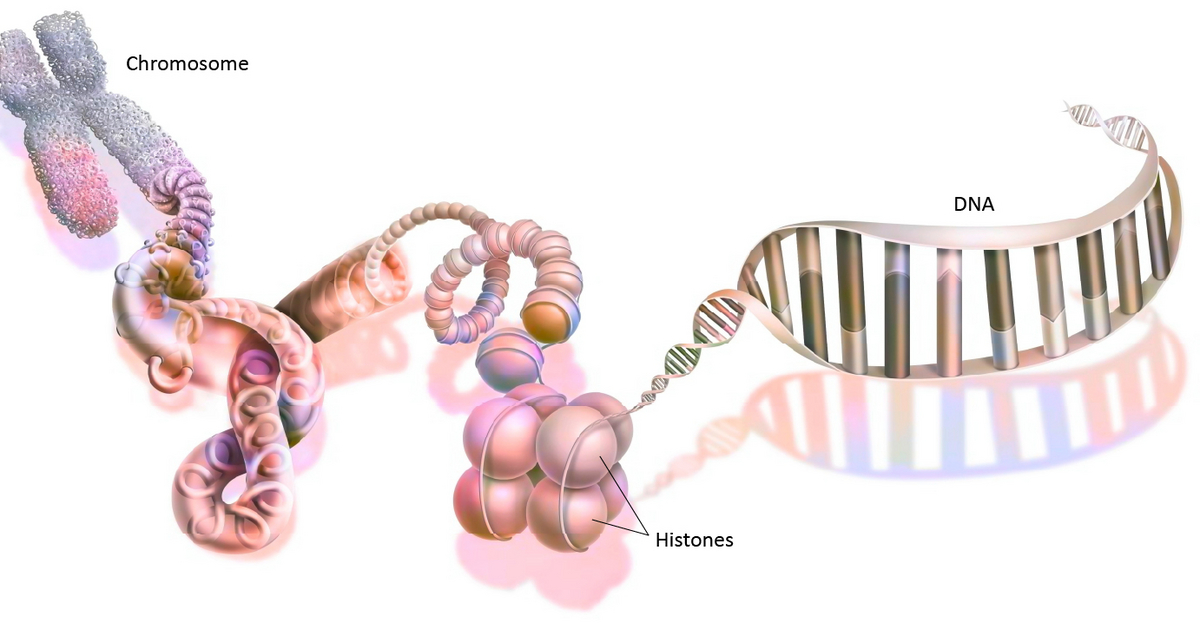
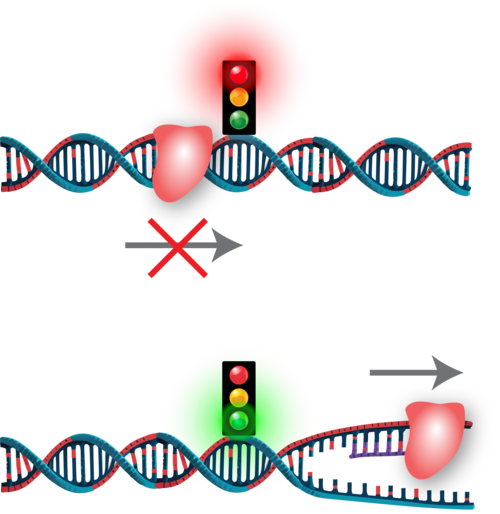
The blueprints for all the proteins that keep our cells running are stored in the DNA. To make the DNA fit in the cell nucleus, it is wrapped around histone proteins, which gives it structure and makes it more compact. Tightly packed genes are generally not active. In areas where the DNA is only loosely packed, however, the genes can be activated and the corresponding proteins produced.
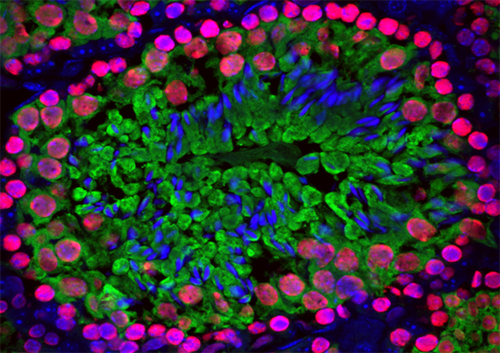
Different cell types have different genes activated – for instance, some genes are only active in nerve cells and give them their characteristic properties. Other genes are active in skin cells, while still others are mainly active in muscle or bone cells. The active genes therefore determine what type of cell it is and what it can do.
The switching on and off of genes is controlled by the addition or removal of epigenetic markers. These are small chemical groups (such as methyl groups) that can be attached either to the DNA itself or to the histones around which the DNA is wrapped. These markers control whether the DNA is tightly packaged or easily accessible.
The epigenetic clock measures our biological age
As we age, these markers, which are so important for the function of cells, change. These changes can occur because of our environment (e.g. diet, exercise, smoking), mistakes our cells make in maintaining them, or simply by chance. As a result, genes that should be silenced may become active again or important proteins may no longer be produced. The affected cells then lack components for important processes, without which they can no longer function properly. These changes can also contribute to ageing.
Researchers can use these epigenetic changes as a measure ofhow well our bodies are functioning. Scientists refer to this as our biological age. This can differ significantly from our chronological age, i.e. the time since we were born.
The "epigenetic clock" specifically measures places in our DNA where methyl groups are known to change in a predictable pattern with age. By comparing an individual’s methylation patterns with the average methylation patterns in people of various ages, researchers can build a timeline of expected methylation changes over time and determine their biological age - a good indication of whether someone is ageing faster or slower than usual.
Biological ageing can be accelerated or slowed down
Epigenetic clocks are already being used in anti-ageing studies. They can be used to measure how effective a tested treatment is at slowing or potentially reversing aspects of biological ageing. The development of epigenetic clocks has shown for the first time that our biological age can be changed.
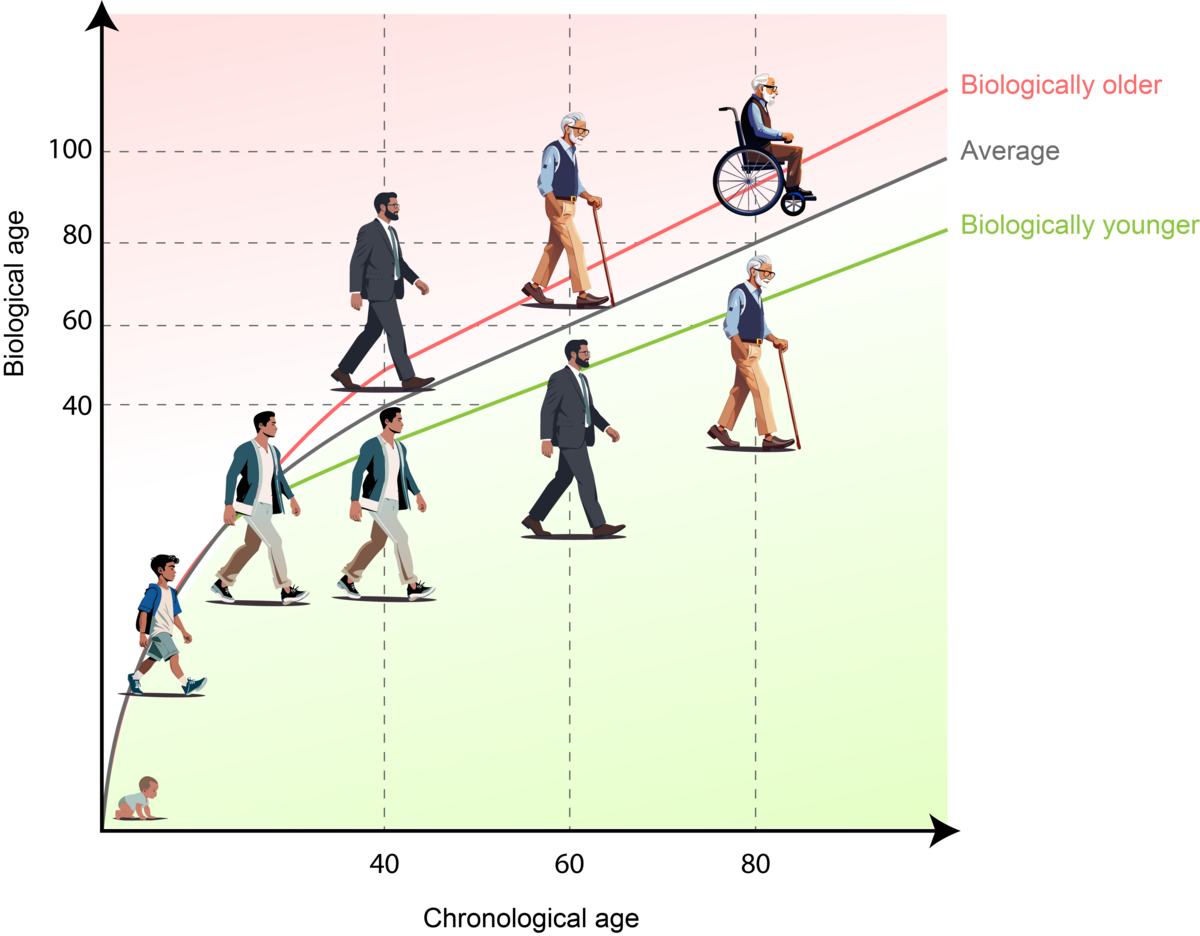
Our biological age can increase faster or slower than our chronological age. An individual who is biologically older is typically more sick and frail (i.e. ageing faster) than a biologically younger individual. Image copyright © 2026 Centre for Healthy Ageing & Institute of Molecular Biology gGmbH. Unauthorised use prohibited.
The copyright for this text is held by the Centre for Healthy Ageing and Institute of Molecular Biology (IMB) gGmbH.
Authors: Vanessa Kellner (PhD), Cheryl Li (PhD), Samantha Schmaul (PhD) and Ralf Dahm (PhD).
This text is for general informational and educational purposes only. We make every effort to ensure that the information published is accurate and supported by the current scientific literature at the time of writing. This information is, however, not intended to provide medical advice or replace a qualified medical practitioner. Please consult your doctor or health care professional if you have any concerns or questions about your health or the information in this document.